Birdfeeding
Dec. 25th, 2025 02:34 pmI fed the birds. I've seen a mixed flock of sparrows and house finches.
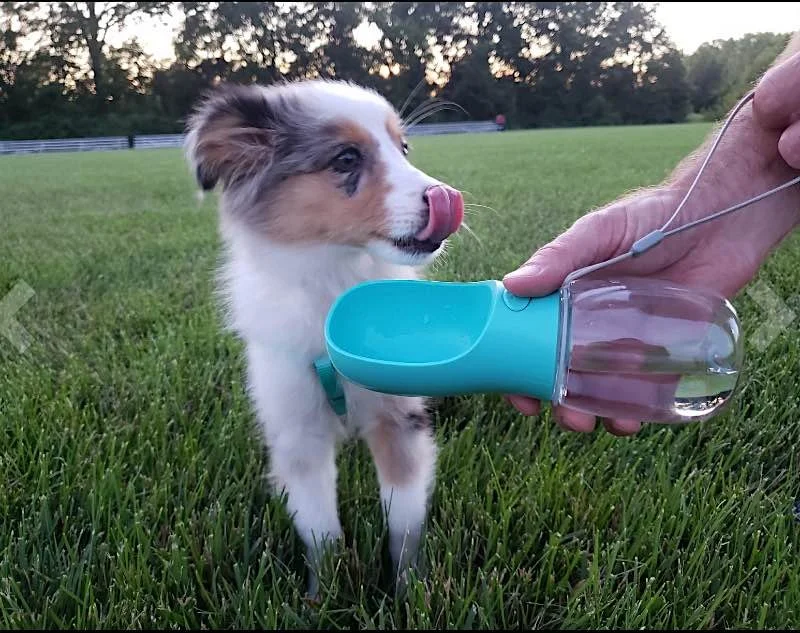
I put out water for the birds.
EDIT 12/25/25 -- I did a bit of work around the patio.
EDIT 12/25/25 -- I hauled the last large branches to the ritual meadow. Then I started the long process of raking the parking lot.
EDIT 12/25/25 -- I did more work around the patio.
EDIT 12/25/25 -- I did more raking in the parking lot.
I've seen two squirrels in the trees. I've seen several cardinals flying around.
EDIT 12/25/25 -- I did more work around the patio.
It's drizzling again.
As it is getting dark, I am done for the night.
Yule Memory
Dec. 25th, 2025 02:00 pm
"[Thanos in the movies] is a different character [from the comics] in some ways, but not that many. A lot of the gentler moments he had in the movies are right from the comics. He and Gamora have always had a very tight, unusual and complicated relationship." -- Jim Starlin
( Scans under the cut… )
Reading Thursday (The October Edition)
Dec. 25th, 2025 08:37 amThis being the book club one. A trans woman in contemporary London feels trapped by mediocrity and inertia. She has a job she doesn't like but pays well enough. She has friends she more or less gets along with, but aren't great people. She writes poetry that does okay, but never really goes anywhere. She has tense meetings with her family, who love her but are bound by an inability to actually communicate. Meeting a new guy seems like it might nudge her into something better, but her overwhelmingly low standards and lack of ambition might sink that too. There are also flashback from the boyfriend's point of view, about a youthful trip to South East Asia, which ends in violence.
This book was a lot of people being mildly terrible, and everyone feeling like they ought to do something about improvement, then... not doing that. It was often quite funny, and Dinan has some great one-liners that cut through to the core of people's motivations. Though it's mostly about the failure mode of... pretty much everything, there were glimmers of the protagonist at least trying to work on the people around her, and maybe even herself. None of that was really enough to lift the book out of its mire of dreariness, though. It was a lot of time to spend with the grindingly unpleasant.
I read this when it came out, and remember not being deeply impressed. I think I expected there to be more of a story, or perhaps more of a resolution. Rereading it some years later, I liked it a lot better. (Though several of my classmates had my initial "Is that all there is?" reaction.)
Vivek starts getting oddly poetic transphobic death threats via email, and becomes obsessed with the sender, paranoid it could be someone she knows, afraid it could be a stranger on the subway. She collaborates with artist Ness Lee (always shown drawn in her distinctive black and white line art, while everyone else is in colour) to make the novel we're reading, while still being haunted and possibly hunted by the letter writer.
This benefits from close reading, as the images are symbolically very rich, and the colourists do a lot of work with motifs and character themes. Literary graphic novels can be redundant, at times, with the pictures just showing you what the text is already saying, and a general feeling that this could've been an e-mail, but the art here is telling its own story, running alongside, underneath and through the text. It's very well done, and I'm sad that Shraya switches genres with every project, as I'd like to see more of this from her. Though she does great work in all the other genres, too.
I hadn't managed to read this before, and it's a lot. Bechdel tells the story of her relationship with her father, including discovering he was gay, and his ambiguous death. She's based the story on her teenage diaries, found documents such as family photographs, newspaper clippings, dictionary entries, and maps, and a reading list she shared with her father. Each section takes on themes of one of the works mentioned (including In Search of Lost Time, Great Gatsby, The Importance of Being Earnest), going over and back over the events of her youth and her father's death. The whole thing sits inside a frame of the story of Daedalus and Icarus, though it's not clear which character is meant to be whom.
The text is dense and recursive, as if Bechdel is still unable to face what happened full on, and keeps sliding up to it sideways, keeps feeling the emotions vicariously through other stories. At one point, she talks about how in a childhood bout of OCD, she kept writing symbols over top of the names of important people and things in her diary, as a kind of ward against the evil eye. To some extent, the whole novel feels like that: as if she's writing over and over the events of her childhood to take a curse off them. It probably rewards rereading, but it's also a lot.
Second time through this, and it's still great. It's difficult to imagine the impact of this in the early 1980s, when queer lit was very much a thing, but also more siloed and less diverse. I should look up contemporary reviews, and see if this was indeed like a bomb going off, or was taken in stride. Incredible depth, incredible emotion, wonderful literary voice. I don't have a lot to say otherwise: It's great and you should read it!
It was interesting what I remembered from reading it a few years ago: the abortion, the execution of the Rosenbergs, working in the factory, not fitting in with the butch/femme lesbian bar scene, Kitty. I was surprised at how late in the book we meet Kitty, and how abrupt the ending was.
Hello, Seattle [status]
Dec. 25th, 2025 11:16 amYesterday's flights wound up being kind of interesting, mostly in that a friend and I discovered at the last minute that we were on the same initial flight to Las Vegas! It was really nice to have the company of her family in the airport while we waited (not to mention, great to carpool with them to the airport). And then, I wound up arriving in SeaTac at almost the exact same time as
And now, Seattle, and the house I grew up in, with all its artefacts, old and new. Lots of things to think about.
I miss the cats already.
Christmas Cheer
Dec. 25th, 2025 02:00 pmOK, team, let's see some holiday spirit!!
*ahem*
[waving pom-poms]
Give me an R!
"R!"
Give me an H!
"H!"
Give me an A!
"A!"
Give me an S!
"S!"
What's that spell?!
"MERRY X-MERRY!"
[hip sashay]
Uh-huh, uh-huh, UH-HUH!
Now gimme a G!
"G!"
Throw it back in!
"N!
"Wait, we mean G!"
Got any extra Ls?
"YUP!"
Now just go nuts!
"Ecky ecky ecky pakang ZOOM boing erumferzerserestibleser... "
[trails off into confused mumbles]
[forward somersault into full leg split]
WAHOOO!!
Go marry, Go marry! Go! Go! Go marry!
[collapses into chair]
Ok, gang, take five.
I think my eyes are bleeding.
Well, no matter HOW you spell it, have a Merry Christmas, everyone!
Thanks to Abby, Jennifer S., Susan R., Christopher F., Kerri P., Catherine P., Jessica F., Kae B., Mel A., and George for spelling it out for us.
*****
P.S. I just bought another pair of these sleep headphones, so time for another shout-out!
Bluetooth Sleep Headphones
I have the kind of insomnia old-timey bards would write songs about, so I listen to boring audio books on these every night to keep my brain from spinning out of control. Lately I've been wearing them like a sleep mask - like the model here - and WOW, that's helped even more than when I wore them like a headband! These things have been a life saver: comfy enough for side sleeping, not too loud like some of my old speakers, and they only cost $20. Plus my original pair lasted a good 2 years before one of the wires went loose.
Please note that these do run on the big side, but that works out great if you have a big head like me. :D
*****
And from my other blog, Epbot:
noel
Dec. 25th, 2025 12:00 amMerriam-Webster's Word of the Day for December 25, 2025 is:
noel \noh-EL\ noun
When capitalized, Noel refers to Christmas or the Christmas season. Uncapitalized, noel refers to a Christmas carol.
// We were greeted at the door by a group of carolers singing noels.
// Every year we send our family Christmas cards with our photo enclosed wishing everyone a joyous Noel.
Examples:
“The meeting began with a touch of holiday spirit as members of the Woodland Park High School Madrigals sang three selections. The first was a Noel song with a medieval/renaissance feel that was well matched to their festive costumes. They followed with the popular ‘Carol of the Bells’ and ‘We Wish You a Merry Christmas.’” — Doug Fitzgerald, The Pikes Peak (Colorado) Courier, 9 Dec. 2024
Did you know?
English speakers borrowed noel from the French word noël, which is also used for both the Christmas holiday and a Christmas carol. It can be traced further back to the Latin word natalis, which can mean “birthday” as a noun or “of or relating to birth” as an adjective. (The English adjective natal has the same meaning and is also an offspring of natalis.) Noels were being sung in Latin and French for centuries before English-speakers started using the word to refer to Christmas carols in the 18th century. An early use of noel (spelled Nowel) to mean “Christmas” can be found in the text of the late 14th-century Arthurian legend Sir Gawain and the Green Knight.
Seasons' Greetings 2025 (Gregorian)
Dec. 24th, 2025 09:52 pmLeaving it at that for tonight.
goldfinches
Dec. 24th, 2025 08:00 pmsock - nyjer seed - goldfinches and the occasional junco
platform feeder - safflower seed - house finches and cardinals (the cover is too low for the doves)
squirrel-proof column feeder - mix of safflower and black oil sunflower - house finches, chickadees, sometimes a nuthatch. I get woodpeckers when I use a better mix of seed (downy and red-bellied, occasional hairy).
ground - safflower and sunflower - mourning doves, juncos, cardinals, squirrels. Saw some goldfinches there today.
I should get some suet.
I just received a feeder/webcam as a gift. I'll have to figure out where to put it. I want to put it on the side of the shed, but I'm not sure it gets wi-fi signal out there.
Merry Christmas: Scientists reverse Alzheimer's in mice [sci/bio/med]
Dec. 24th, 2025 07:03 pmBy examining both human Alzheimer's brain tissue and multiple preclinical mouse models, the team identified a key biological failure at the center of the disease. They found that the brain's inability to maintain normal levels of a critical cellular energy molecule called NAD+ plays a major role in driving Alzheimer's. Importantly, maintaining proper NAD+ balance was shown to not only prevent the disease but also reverse it in experimental models.
Why This Approach Differs From Supplements
Dr. Pieper cautioned against confusing this strategy with over the counter NAD+-precursors. He noted that such supplements have been shown in animal studies to raise NAD+ to dangerously high levels that promote cancer. The method used in this research relies instead on P7C3-A20, a pharmacologic agent that helps cells maintain healthy NAD+ balance during extreme stress, without pushing levels beyond their normal range.
NAD+ levels naturally decline throughout the body, including the brain, as people age. When NAD+ drops too low, cells lose the ability to carry out essential processes needed for normal function and survival. The researchers discovered that this decline is far more severe in the brains of people with Alzheimer's. The same pattern was seen in mouse models of the disease.Note, potential conflict of interest: the head of the lab, Dr Pieper, above, has a serious commercial interest in this proving out:
[...]
Amyloid and tau abnormalities are among the earliest and most significant features of Alzheimer's. In both mouse models, these mutations led to widespread brain damage that closely mirrors the human disease. This included breakdown of the blood-brain barrier, damage to nerve fibers, chronic inflammation, reduced formation of new neurons in the hippocampus, weakened communication between brain cells, and extensive oxidative damage. The mice also developed severe memory and cognitive problems similar to those seen in people with Alzheimer's.
[...]
This approach built on the group's earlier work published in Proceeding of the National Academy of Sciences USA, which showed that restoring NAD+ balance led to both structural and functional recovery after severe, long-lasting traumatic brain injury. In the current study, the researchers used a well-characterized pharmacologic compound called P7C3-A20, developed in the Pieper laboratory, to restore NAD+ balance.
The results were striking. Preserving NAD+ balance protected mice from developing Alzheimer's, but even more surprising was what happened when treatment began after the disease was already advanced. In those cases, restoring NAD+ balance allowed the brain to repair the major pathological damage caused by the genetic mutations.
Both mouse models showed complete recovery of cognitive function. This recovery was also reflected in blood tests, which showed normalized levels of phosphorylated tau 217, a recently approved clinical biomarker used to diagnose Alzheimer's in people. These findings provided strong evidence of disease reversal and highlighted a potential biomarker for future human trials.
The technology is currently being commercialized by Glengary Brain Health, a Cleveland-based company co-founded by Dr. Pieper.The actual research article:
2025 Dec 22: Cell Reports Medicine [peer-reviewed scientific journal]: Pharmacologic reversal of advanced Alzheimer's disease in mice and identification of potential therapeutic nodes in human brain by Kalyani Chaubey et al. (+35 other authors!):
Abstract:Full text here: https://www.cell.com/cell-reports-medicine/fulltext/S2666-3791(25)00608-1
Alzheimer's disease (AD) is traditionally considered irreversible. Here, however, we provide proof of principle for therapeutic reversibility of advanced AD. In advanced disease amyloid-driven 5xFAD mice, treatment with P7C3-A20, which restores nicotinamide adenine dinucleotide (NAD+) homeostasis, reverses tau phosphorylation, blood-brain barrier deterioration, oxidative stress, DNA damage, and neuroinflammation and enhances hippocampal neurogenesis and synaptic plasticity, resulting in full cognitive recovery and reduction of plasma levels of the clinical AD biomarker p-tau217. P7C3-A20 also reverses advanced disease in tau-driven PS19 mice and protects human brain microvascular endothelial cells from oxidative stress. In humans and mice, pathology severity correlates with disruption of brain NAD+ homeostasis, and the brains of nondemented people with Alzheimer's neuropathology exhibit gene expression patterns suggestive of preserved NAD+ homeostasis. Forty-six proteins aberrantly expressed in advanced 5xFAD mouse brain and normalized by P7C3-A20 show similar alterations in human AD brain, revealing targets with potential for optimizing translation to patient care.